Solar and Battery Systems
Sizing an off-grid solar system correctly is the most important factor in its long-term reliability. This guide walks through load analysis, solar sizing, battery bank design, and generator selection for rural properties in eastern Canada.
Sizing an off-grid power system correctly is the single most important factor in its long-term reliability and cost-effectiveness. An undersized system leaves you without power during extended cloudy periods or high-demand days. An oversized system wastes money on components you don't need. Getting it right requires a systematic approach — and an honest assessment of your property's specific conditions.
The foundation of any off-grid system design is a detailed energy load analysis. List every electrical load in your property — lights, appliances, water pump, heating system fans, entertainment equipment, tools — and estimate how many hours per day each runs. Multiply wattage by hours to get watt-hours per day for each load, then sum them up.
For a typical rural home or cottage in the Outaouais or Pontiac, daily energy loads commonly range from 1,000 to 5,000 watt-hours per day depending on size, occupancy, and appliance efficiency. A well-insulated cottage with LED lighting and efficient appliances may need only 1,500 Wh/day. A full-time residence with electric heating backup, a well pump, and normal household appliances may need 4,000+ Wh/day.
Solar production in the Outaouais and Pontiac regions varies significantly by season. Peak sun hours range from 4–5 hours in summer to 1.5–2.5 hours in December and January. Your system must be sized to meet your needs during the worst production months, not just the best.
For most off-grid properties in eastern Canada, December and January are the design months — when solar production is lowest and heating loads are highest. A system sized for summer production will leave you short of power in winter.
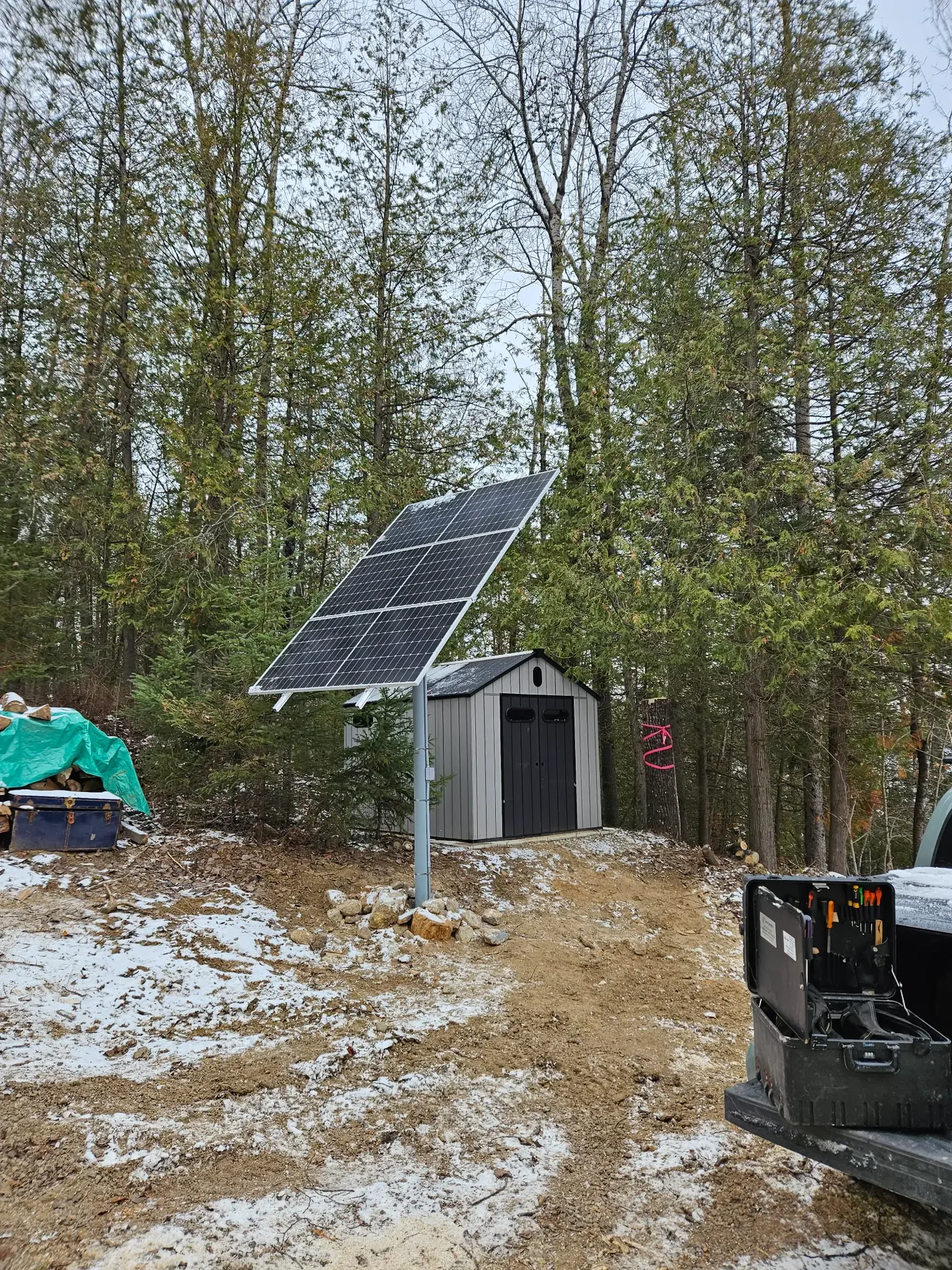
To determine the solar array size needed, divide your daily energy requirement by the peak sun hours for your design month. Add a 20–25% safety factor to account for system losses, panel degradation, and shading.
Example: A property needing 3,000 Wh/day in December, with 2 peak sun hours, needs 3,000 ÷ 2 = 1,500 W of solar before losses. With a 25% safety factor: 1,500 × 1.25 = 1,875 W minimum array size. In practice, you would specify a 2,000–2,400 W array.
Battery storage must bridge the gap between solar production and consumption — overnight, during cloudy periods, and through extended winter low-production stretches. For a full-time off-grid residence in the Outaouais or Pontiac, sizing for 3–5 days of autonomy is typical.
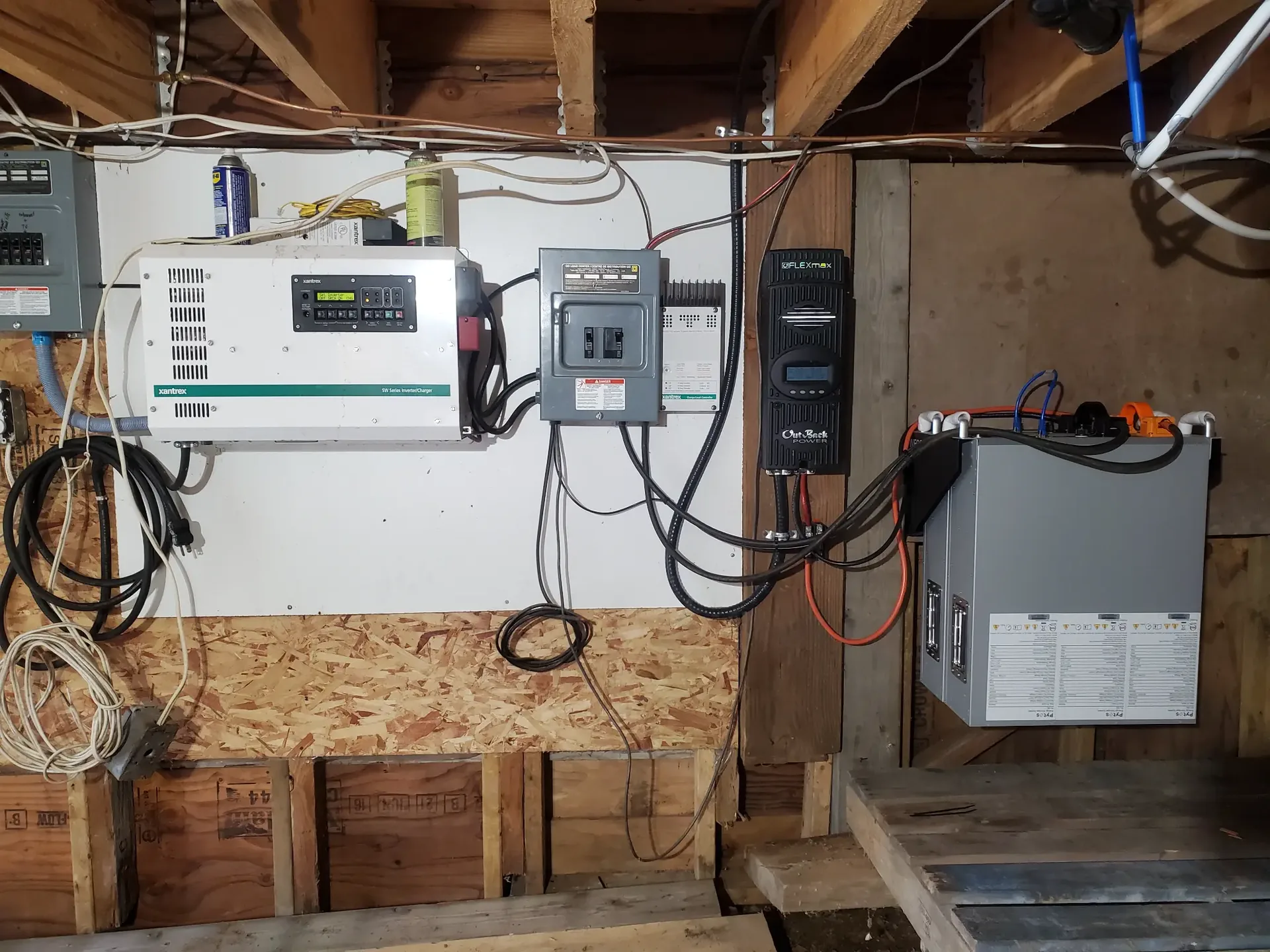
For lithium iron phosphate batteries (our preferred technology for off-grid applications), usable capacity is 80–90% of rated capacity. For lead-acid, usable capacity is 50%. Size your battery bank to provide your required autonomy at the appropriate depth of discharge.
Even a well-designed off-grid solar system needs a generator backup for extended cloudy periods — particularly in Quebec winters. Generator sizing should be based on your peak load requirements and your battery bank charging capacity, not just your average load.
Propane generators are the most common choice for rural off-grid properties in the Outaouais and Pontiac — propane stores indefinitely, is widely available for delivery, and burns cleanly.
Off-grid system sizing involves multiple interacting variables — solar resource, load profile, battery chemistry, generator sizing, and system integration. A professional assessment from Property Developments ensures your system is sized correctly for your specific property and location, avoiding the costly mistakes that come from undersizing or oversizing any component.
Start with the complete property problem. We will help clarify the system requirements, practical options, and the right next step.