Off-Grid Power Planning
Winter is the most demanding season for off-grid power systems in the Outaouais and Pontiac regions. Understanding the challenges and designing for them is essential for year-round reliability.
Winter is the most demanding season for off-grid power systems in the Outaouais and Pontiac regions — and the season that separates well-designed systems from poorly designed ones. Short days, heavy snow loads, cold temperatures, and high heating demands combine to stress every component of an off-grid system. Understanding these challenges before you design your system is essential for year-round reliability.
Solar production in the Outaouais and Pontiac drops significantly in winter. In December and January, peak sun hours may be only 1.5–2.5 per day compared to 4–5 hours in summer. This means your solar array produces 40–60% less energy per day than it does in peak summer months — while your energy consumption for heating, lighting, and other loads may be higher.
The good news: solar panels actually perform more efficiently in cold temperatures. Cold air increases panel voltage and output per unit of sunlight. The challenge is not cold temperatures but reduced daylight hours and the angle of the winter sun.
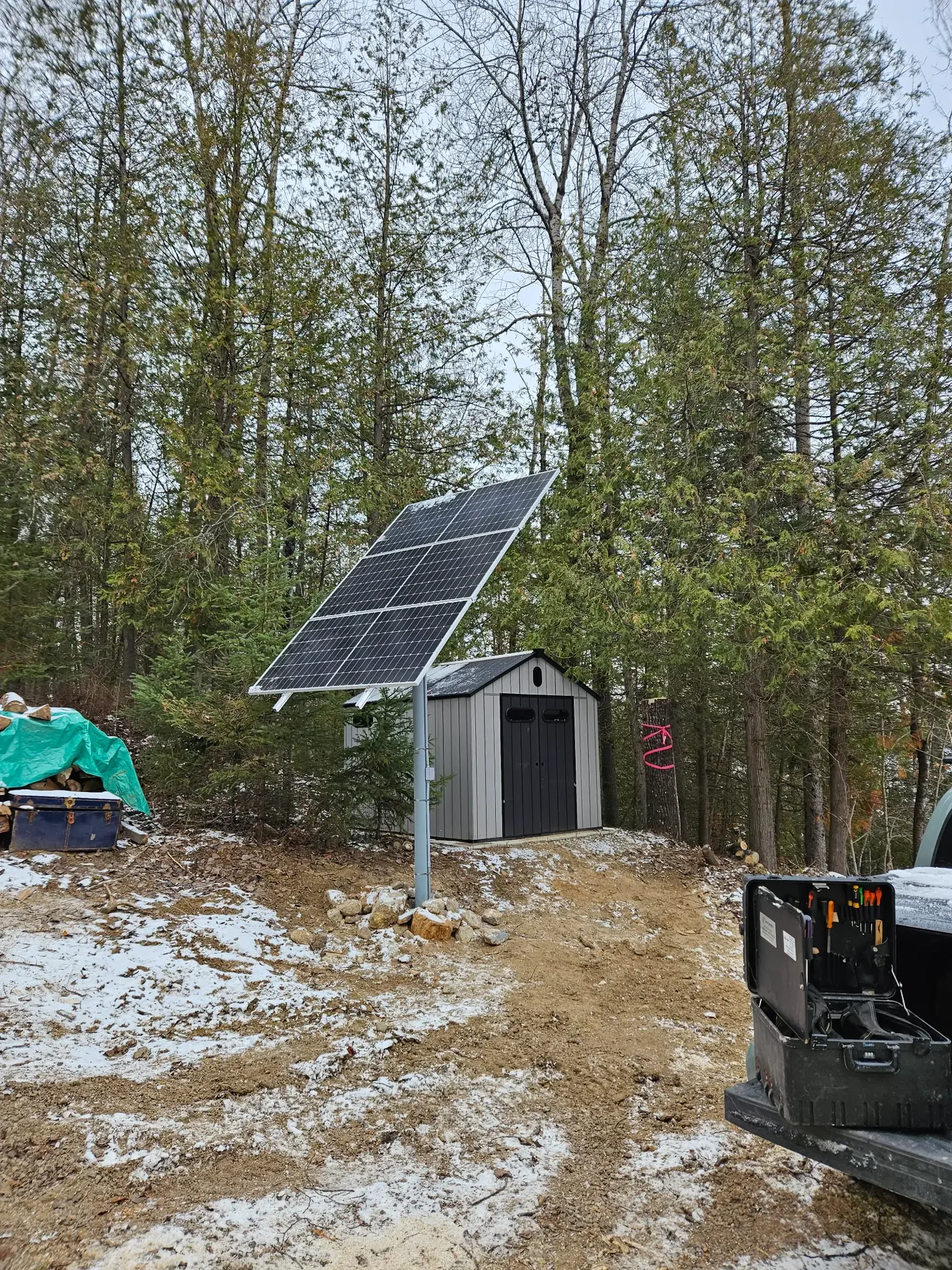
Snow accumulation on solar panels is one of the most common issues for off-grid systems in the Outaouais and Pontiac. A ground-mounted solar array with a steep tilt angle (45–60°) sheds snow more effectively than a roof-mounted system or a low-tilt ground mount. Panels installed at the correct tilt for winter production will often self-clear within a day or two of a snowfall.
Cold temperatures reduce battery capacity — particularly for lead-acid batteries, which can lose 30–50% of their rated capacity at -20°C. Lithium iron phosphate batteries perform significantly better in cold weather, retaining most of their capacity down to -20°C, though charging at very low temperatures requires careful management.
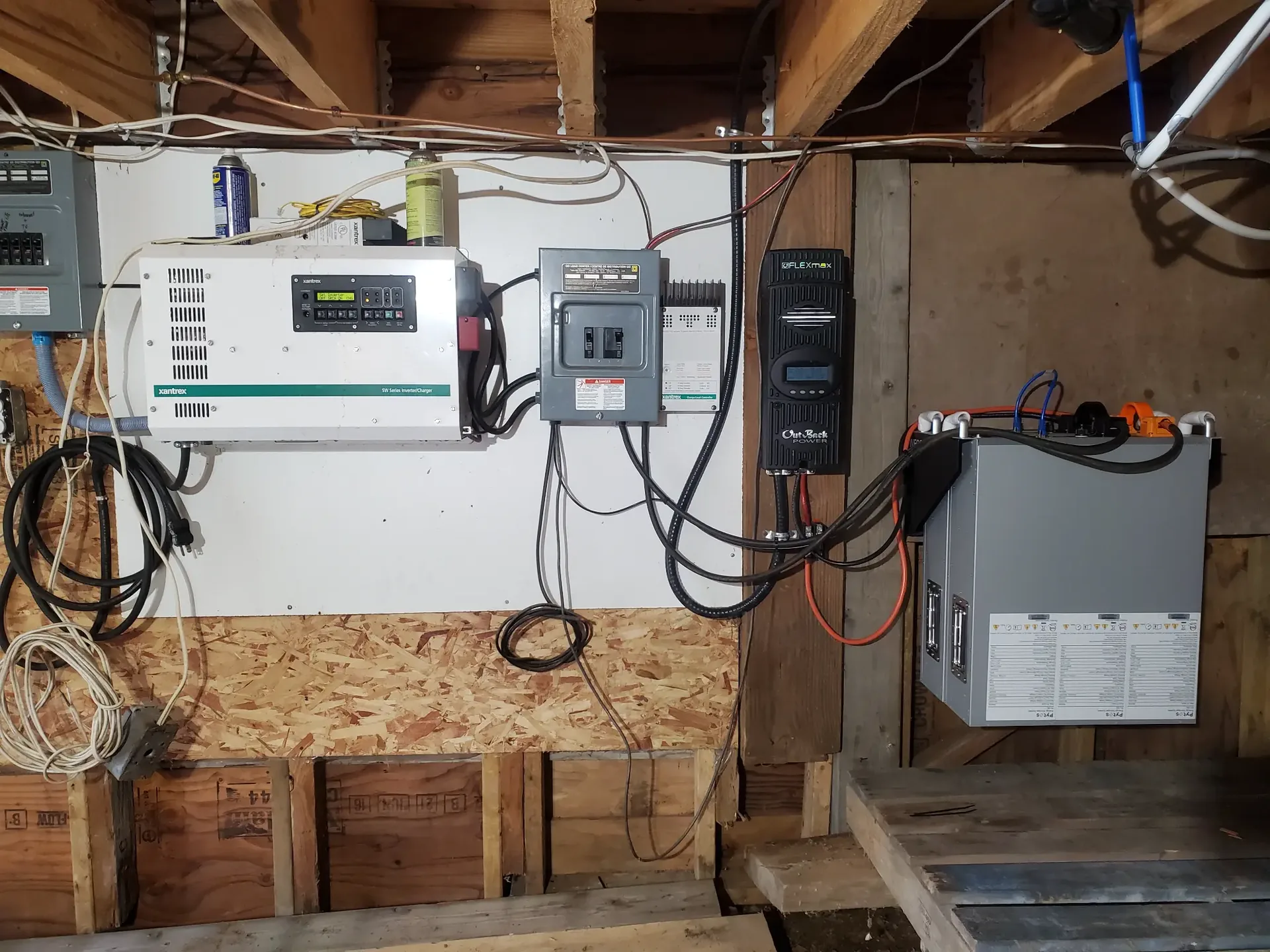
For off-grid systems in the Outaouais and Pontiac, battery bank location matters. Batteries stored in an insulated, heated space maintain their performance through winter.
The key to reliable off-grid power through Canadian winters is designing for the worst case, not the average. Property Developments sizes all off-grid systems for December/January conditions in the Outaouais and Pontiac — ensuring adequate solar array size, battery storage capacity, and generator backup for the most demanding months of the year.
Start with the complete property problem. We will help clarify the system requirements, practical options, and the right next step.